
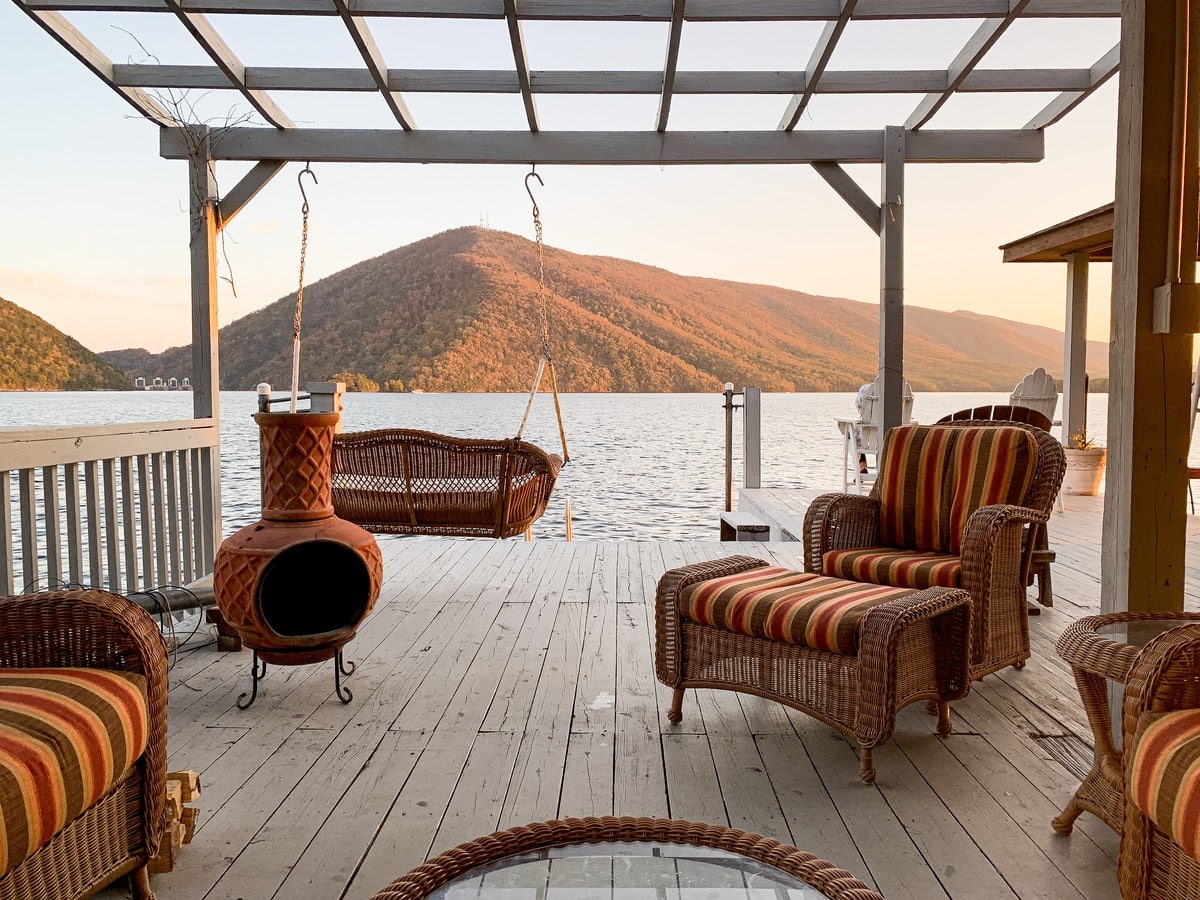
Smith Mountain Lake is one of the main reasons people relocate to this part of Virginia, and once you spend a little time here it is easy to understand why. It is the largest lake contained entirely within the Commonwealth, covering roughly 20,000 acres with about 500 miles of shoreline and stretching some 40 miles across the Blue Ridge foothills. That is a lot of water and a lot of coastline, which means the homes around it are far more varied than most people expect. If you are thinking about living at Smith Mountain Lake, this guide covers the history, the lifestyle, and the practical things that shape a smart purchase.
A lake with real history
Smith Mountain Lake is younger than a lot of people assume. It reached full pond in 1966, after Appalachian Power built the Smith Mountain Dam and impounded the Roanoke River at the natural gap in Smith Mountain. Construction had begun years earlier, and what had been farmland, fields, and rocky gorge slowly filled in to become the reservoir we know today. The dam was built to generate hydroelectric power, and it still does, but the recreation and the community that grew up around the water quickly became the story.
Knowing this history is more than trivia. It explains why the shoreline is so irregular and why coves, points, and channels vary so much from one part of the lake to another. The lake followed the old river valleys and hollows, so no two stretches of shoreline are quite alike.
Where the lake actually is
Smith Mountain Lake borders three Virginia counties: Franklin, Bedford, and Pittsylvania. The south shore sits largely in Franklin County, which is one of the areas I serve, while Bedford County makes up much of the northern half. That county line matters more than newcomers realize, because it can affect taxes, schools, and which town you naturally gravitate toward for shopping and services. Two homes on opposite shores can be a short boat ride apart and still sit in different counties with different day-to-day logistics.
The lake is southeast of Roanoke and southwest of Lynchburg, and it is a comfortable drive from Rocky Mount and the rest of the Martinsville and Southern Virginia area. That central position is part of the appeal. You are on the water but not cut off from real towns, hospitals, and highways.
What living at Smith Mountain Lake actually looks like
Days here tend to revolve around the water, and the experience shifts with the seasons. Summer is the busy stretch, full of boating, swimming, and time on the dock. Spring and fall are quieter and, to a lot of residents, the best times of year, with cooler air and far less traffic on the water. Winter slows down further, which is exactly what some buyers are after and a surprise to others, so it is worth picturing the lake in January, not just July, before you buy.
Fishing is a big part of the culture here. The lake is well known for striped bass, and it draws anglers from well beyond the region. On land, Smith Mountain Lake State Park on the Bedford side offers swimming, camping, hiking, and boat access, and it is a good way to get to know the water before you own on it. Booker T. Washington National Monument, the birthplace of the educator and statesman, is a short drive away and is worth the visit. There are also marinas, restaurants, and shops around the lake, including the Bridgewater Plaza area, so you are not driving an hour for a meal out.
One thing to understand is that Smith Mountain Lake is a living community, not just a vacation spot. Many people live here year-round, so it has a steadier rhythm than a seasonal resort town. That is a plus if you want neighbors and a real community, and something to factor in if you were picturing a quiet second home that stays empty most of the year.
Waterfront is not just one thing
Buyers often arrive picturing a single kind of lake house, then discover the options are much wider. There is deep-water frontage that suits larger boats and sits closer to the main channel. There are gentler coves that feel more protected and private. And there are off-water homes in lake communities that trade a private dock for a lower price and shared access to the water through a common area or marina. None of these is better in the abstract. The right one depends entirely on how you plan to use the lake.
If a boat is central to your plans, the water depth at the dock and the property’s position relative to the main channel matter a great deal. Some coves get shallow, especially when the lake level drops, and that affects what you can keep at your dock. If you mostly want the view and the lifestyle without a big boat, an off-water home can get you into the Smith Mountain Lake real estate market for meaningfully less money.
The practical things to check before you make an offer
Waterfront buying comes with a few questions that do not come up with an ordinary home, and they are the ones I make sure my buyers ask.
Dock permits are first. Docks on Smith Mountain Lake are regulated, and a dock has to be properly permitted. Confirm that any existing dock is permitted and in good standing, and understand what is and is not allowed if you want to add or change one. Water depth at the dock, as mentioned, affects daily use and resale, so ask about it directly rather than assuming.
Many lake properties rely on a private well and a septic system rather than public water and sewer, so ask about the age and condition of both and when the septic was last serviced. If the home is in a community with a homeowners association, read the rules and the fees before you fall for the house, since they govern things like docks, short-term rentals, and shared amenities. Finally, ask how the property is affected by normal lake level changes, because the shoreline you see in a spring listing photo can look different at a lower level later in the year.
Year-round home or second home
It is worth being clear with yourself, and with your agent, about how you intend to use the property. A primary residence, a weekend place, and a home you plan to rent out part of the year point toward different properties, different locations on the lake, and different financing. If you are considering any kind of rental, the HOA rules and county regulations around short-term rentals are essential to check first, because they vary and they change.
Talk to someone who knows the shoreline
Smith Mountain Lake rewards buyers who understand it before they buy. The difference between a great fit and a frustrating one often comes down to the details above, and those are hard to judge from listing photos and a quick drive-by. If living at Smith Mountain Lake is on your list, reach out and tell me how you want to use the water, whether that is a big boat and deep water, a quiet cove, or an off-water home with a good view. That one answer narrows the search faster than anything else, and it is where I can save you the most time.